
About Electric Motors

Electric Motors convert power into energy. You’ll find them powering industrial equipment and everyday household items. In industrial settings, electric motors power machinery that drive production lines, operate heavy-duty equipment, and ensure the smooth functioning of essential services like water and sewage systems.
But you don’t have to go to a power plant or factory to find electric motors at work. Electric motors power household appliances that make our lives easier, like washing machines, refrigerators, and vacuum cleaners. Even in our leisure time, electric motors enhance our experiences, whether it’s through the cooling breeze of a fan or keeping a pool pump circulating clean water. The presence of electric motors underscores their vital role in making our lives more comfortable, efficient, and connected.
How do Electric Motors Work?
Electromagnetism is one of the four fundamental forces of nature. It deals with how electrically charged particles interact when passing through electromagnetic fields. Electromagnetism is what allows an electric motor to convert power into energy. At the heart of an electric motor is the interaction between a magnetic field and an electric current. For an electric motor to function, it requires a power source, which can be either direct current (DC) or alternating current (AC).
Creating Motion
Inside a motor’s housing are parts known as the stator and the rotor. The stator is usually the outer portion made up of windings and laminations. Inside is the rotor, the center supported by bearings. Together, the stator and rotor form interacting magnetic fields. With power provided by a DC or AC source, electricity engages the motor. The rotor and stator rotate in response, turning the motor shaft, creating motion.The external shaft of the motor is connected to the device it powers, either directly, or through an external coupling. When the rotor turns, the motion will create enough energy to power the application.
Basic Motor Principles
Electric motors create power thanks to the principles of magnetism and electricity.
Magnetism and Motors
For thousands of years, people have harnessed the power of magnetism.
Magnets attract iron and some steel alloys. A magnet has a “north seeking” pole and a “south seeking” pole. This is why a compass indicates direction. The north seeking point of the compass needle turns toward the earth’s north magnetic pole.
With magnets as with people, opposites attract. The north pole of one magnet will cling to the south pole of another magnet, but two north poles placed near each other will tend to push the magnets apart.

Iron, steel, nickel and a few other materials can be magnetized. Because soft iron holds its magnetism only a short time, it is called a temporary magnet. On the other hand, steel holds its magnetism very well and is used to make permanent magnets.
Certain special alloys make magnets much more powerful than iron or steel. One of these is alnico, which is a combination of iron, nickel and aluminum, and sometimes cobalt and copper.
Every magnet creates a special magnetic field around itself. The greatest pull (or attraction) is at the two poles of the magnet. Like sound waves, these invisible lines of force, called magnetic flux lines, extend from one pole to the other.
Once a motor is powered on, magnetically charged metals will interact with each other, creating motion.
Electricity
Electricity is a form of energy, just like magnetism. Over the centuries, we have learned how electricity works and how to harness it. Electricity can be either static or current. If it is stored and not moving, we call it static electricity. Some materials carry electric current better than others. Those that carry it well are called conductors. All metals are fairly good conductors, but copper wire is most often used to conduct electricity. Other materials that do not carry electricity well are called non-conductors, or insulators. Among these are paper, glass, wood and rubber.
Motors and Power
A few basic terms are commonly used in discussing power and motors.
Unit of Work
Unit of work means Force multiplied by Distance. For example, if you lift a 50-pound weight two feet, you have performed 100 foot-pounds of work. The time required to lift it is not considered in figuring units of work.
Torque
Torque is a force that tends to produce rotation. In terms of electric motors, torque is the turning effort (or force) applied to a shaft. Usually expressed in inch-pounds or inch-ounces for fractional and sub-fractional HP motors. If a force of 50 pounds is applied to the handle of a 2’ crank, this force produces 100 pounds of torque (twist-ability) when it is at a right angle to the crank arm.
Horsepower
Torque may be converted into horsepower when the element of time is considered. If the torque in foot pounds is measured over a given period of time—for example, one second or one minute—it becomes foot pounds per second or per minute , and may be converted into horsepower.
When torque, in foot pounds, is multiplied by the speed in revolutions per minute, it may be divided by the constant 5250 to find horsepower. Using this formula Horsepower has been the common measurement for mechanical power since the 1760s.
In terms of a minute, one horsepower is the power required to lift 33,000 pounds one foot. A unit of power, then, is equal to a rate of 33,000 foot-pounds of work per minute, or 550 per second.
Current
Electricity is measured in different units.
Watts are a unit of electric power. Voltage is the measurement of electric pressure. Amperage is the quantity of electric current. Ohms are the amount of resistance a conductor offers to the passage of current through it.
Current can have either high or low voltage.
Direct current electric power in watts is figured by multiplying the number of volts by the number of amperes.

Motors and The Forms of Energy
Energy has many forms and it can be changed from one form to another. Light bulbs, for example, convert electrical energy into light and heat. The battery in your car stores up chemical energy which is converted into electrical energy when you turn on the starter. The starter then converts the electrical energy into mechanical energy to start the engine. The chemical energy of the gasoline is changed into mechanical energy by the engine, and this, in turn, is converted into electrical energy by the generator. The ignition coil converts the electrical energy from one voltage of amperage to a different voltage and amperage.
Electric motors also convert energy. They change electrical energy taken from power transmission lines into mechanical energy to do useful work like pumping water or powering a fan. A motor’s type is defined by the electrical energy supplied to it, whether from Direct Current power, or Alternating Current power.
Power Sources
Direct Current (DC) Motors
DC power sources provide a constant flow of electricity in one direction. Batteries and solar cells are common examples of DC power sources. DC motors are designed to operate with this steady flow of current.
Alternating Current (AC) Motors
Unlike DC, AC power sources provide electricity that periodically reverses direction. This is the type of current supplied by the power grid and is used in most household and industrial applications. AC motors are built to handle this alternating flow of electricity.
Motor Construction
Both the inner and outer parts of electric motors play an important role in motors turning power into motion.
Rotor and Stator
The two major assemblies that make up an electric motor are the rotor and the stator.
The rotor is comprised of the shaft, rotor core (an assembly of laminations and diecast aluminum squirrel cage conductors and end rings), and usually a fan.
The other major part is the stator. The stator is formed from steel laminations stacked and fastened together so that the notches (called slots) form a continuous lengthwise slot on the inside diameter. Insulation is placed to line the slots, and then coils wound with many turns of wire are inserted into the slots to form a circuit. The wound stator laminations are pressed or otherwise assembled within a cylindrical steel frame to form the stator.

How Windings and Poles Determine a Motor’s Speed
The electrical makeup of the motor determines how the coils of wire are wound. These coils provide two or more paths for the current to flow through the stator windings.When the coils have two centers, they form a two-pole motor; when they have four centers, they form a four-pole motor. In short, the number of coil centers determines the number of poles a motor has.
A motor’s number of poles determines its speed. 60 Hz power “cycles” 60 times each second, or 3,600 times each minute. When the stator is wound in the form of two poles, they change their polarity 3,600 times each minute. The rotating magnetic field induces the rotor conductors to follow.
All alternating current induction motors “slip.” That is, they cannot quite keep up with the speed of the pole changes within the stator. The speed of the magnetic field within the stator is called the synchronous speed of the motor. A two-pole motor has a synchronous speed of 3,600 RPM on 60 Hz alternating current. However, slip accounts for an actual speed of 3,450 RPM. To determine the synchronous speed (or RPM) of an electric motor, divide the cycles per minute by the pairs of poles.
Other Electric Motor Components
Motor Bearings
Bearings are an important part of any electric motor setup. In short, bearings support rotation of the motor’s shaft. They reduce friction to smooth rotation. Bearings also maintain the correct position for the shaft as it rotates. Two bearing types used in electric motors are the sleeve bearing and the ball bearing.
Sleeve Bearings
Sleeve bearings, sometimes called bushings, are usually thin-walled tubes made from steel-backed babbitt or bronze. Oil grooves are cut on the inside surface to insure proper lubrication of the bearing.
Sleeve bearings are used in the smaller motors for light and medium duty service. When correctly maintained by periodic lubrication, these bearings give years of trouble-free service. Most sleeve bearings are designed for all position mounting, and may be used in the vertical position.
Ball Bearings
Ball bearings are formed by enclosing a number of hardened steel balls between grooved inner and outer rings of hardened steel called races. Sometimes a light metal spacer called a cage is used to space the balls evenly around the races. To insure long, maintenance-free life, these bearings can be packed with lubricant and sealed by mounting these metal discs or rings on each side of the opening between the inner and outer race.
Electric Motor Enclosures
Enclosures are the housing, or outer part of a motor. Enclosures protect a motor from the ingress of liquids and substances that can harm a motor while also allowing air to circulate. Certain types of locations will require a specific motor enclosure.
There are many types of motor enclosures, with the most common being the open enclosure. Other enclosure types include drip-proof, open drip proof, totally enclosed, and totally-enclosed fan cooled (TEFC).
Open Motor
An open motor is one having ventilating openings which permit passage of external cooling air over and around the windings of the motor. The term open designates a motor having no restriction to ventilation other than that necessitated by mechanical construction.
Drip-Proof Motor
Like an open motor, a drip-proof motor has ventilating openings. However, these openings in drip-proof motors are made so that successful operation is not interfered with when drops of liquid or solid particles strike or enter the enclosure at any angle from 0 to 15 degrees downward from the vertical.
Open Drip-Proof Motor
Open drip proof motors have venting in the end frame and/or main frame that prevents drops of liquid from falling into the motor within a 15 degree angle from the vertical. ODP motors are designed for use in areas that are reasonably dry, clean, well-ventilated, and usually indoors. If installed outdoors, ODP motors should be protected with a cover that does not restrict air flow.
Totally-Enclosed Motor
A totally-enclosed motor is one constructed so the enclosure prevents the free exchange of air between the inside and outside of the case but is sufficiently enclosed to be termed air-tight.
Totally-Enclosed Fan Cooled Motor
A totally-enclosed fan-cooled motor (or TEFC motor) is equipped for exterior cooling by means of a fan (or fans) integral to the motor but external to the enclosing parts.
Other motor enclosure types include:
- Explosion-Proof
- Totally-Enclosed Nonventilated
- Dust-Ignition-Proof
- Totally-Enclosed Fan-Cooled Guarded
- Totally-Enclosed Air-Over (TEAO)
Electric Motor Mounts
Mountings hold electric motors in place. The four most frequently mounting methods are:
- Rigid Mounts
- Resilient Mounts
- Stud Mounts
- Flange Mounts
Rigid Motor Mounts
Rigid mounts are the most common type of motor mounting, a rectangular steel plate conforming to the shape of the bottom of the case or frame of the motor. Rigid mounts get their name because the frame of the motor is welded to the base.
Resilient Motor Mounts
Resilient mounts are another very common type of motor mounting. Resilient mounts feature rubber rings fitting over cylindrical notched parts of the end bells. The cylindrical parts support the weight of the motor while the notches keep it from turning within the rubber rings. These rings are bonded to a metal or molded plastic band surrounding the outside diameter of the rubber. In turn, the metal or molded plastic bands are supported by a U-shaped steel support base and are firmly held in place with a simple screw- operated clamp arrangement.
Resilient mounting is one method of isolating the vibration or noise caused by the motor drives. The rubber rings quiet and isolate the motor from its surroundings. They also afford a torque cushion for the motor, lessening the shock caused by starting or stopping.
Stud Motor Mounts
Stud mounts are typically found on small fan motor applications. The end bells of these motors are held together by two or more long bolts that project approximately 1 inch from the end bell at the shaft end of the motor. These bolt ends are secured to the cross bar of the fan housing with a nut and lock-washer.
Flange Motor Mounts
Flange mounts usually require an end bell with a special configuration, most commonly a machined flat surface perpendicular to the axis of the motor shaft and a machined pilot fit concentric with the shaft. It may have two or more holes (plain or tapped) through which bolts are secured. The most typical flange mountings are the oil burner and NEMA flanges.
Motor End Bells
Motor end bells are known by several names, including end shields, cover plates, end brackets, and covers. No matter the name, they are a part of the housing that support the bearings and protect other internal components.
End bells must fulfill several very important physical requirements. They must be strong enough to support the motor shaft bearings under the most severe load conditions, and they must be rigid to maintain alignment of the bearing bores throughout the life of the motor.
Weights mounted on the shaft or hanging from the shaft, such as chain and sprocket or belt and sheave drives, must be supported by the output shaft end bell. This type of overhung loading usually determines the sizes of the new shaft bearing and the shape of the end bell.
The end bells also center the rotor (or armature) accurately within the stator to maintain a constant air gap between the stationary and moving cores.
AC Induction Motors
An Induction motor (also called an asynchronous motor) uses an alternating current (AC) power source to transform electricity into motion. AC induction motors use electromagnetic induction from the magnetic field of the stator winding as the electric current to produce torque.
There are two categories of AC Induction motors: single phase and three phase.

Single Phase Vs. Three Phase Motors
Single phase motors receive their power from one AC line. Three phase motors receive their power from three single-phase lines. Each of these lines is one third of a cycle out of phase from the one before it. This produces a more consistent power level.
The main advantages of three phase motors are in power rates and motor construction. Three phase motors offer improved efficiency and power factor with lower power rates. Additionally, the lack of capacitors and internal mechanical switches makes them more reliable and lighter. Three phase motors are self-starting and require less starting current. Three phase motors are also more easily reversed by switching any two of the three power supply leads.
Permanent Magnet Motors (PMAC Motors)
Permanent magnet motors use powerful permanent magnets in place of rotor windings and brushes traditionally found within standard induction electric motors. This feature gives PMAC motors a simplified design. The powerful permanent magnets create a constant flux in the air gap (making the rotor windings brushes unnecessary). Replacing the windings and brushes with permanent magnets results in the accurate and controllable performance of a synchronous motor with the robust design of a standard AC induction motor.
This internal design gives permanent magnet motors benefits in motor life, energy efficiency, and speed control.
Permanent magnet motors are ideal in applications where variable speed and torque requirements are essential. You can find permanent magnet motors in industrial manufacturing, renewable energy and HVAC systems.
Electronically Commutated Motors
An innovation introduced to the market within the last few decades, electronically commutated motors (ECMs, or EC Motors) are on their way to replacing permanent split capacitor motors as the dominant motor in HVAC applications. ECMs are a type of permanent magnet motor. Equipped with integrated control technology , ECMs are a type of smart motor. ECMs seamlessly convert AC line voltage into a DC bus voltage and further into a simulated AC signal. This intelligent control lets an ECM make dynamic adjustments in speed, torque, and airflow to precisely meet diverse application needs. ECMs can effortlessly adapt to fluctuating load demands while maintaining exceptional energy efficiency.ECMs excel in air handling units, condensing units, and refrigeration systems. In HVAC applications, ECMs can provide constant airflow; improving the comfort levels of indoor spaces.

DC Motors
Direct Current motors (or DC motors) are the oldest members of the electric motor family, dating back to the early nineteenth century. As technology has evolved, so have DC motors. Innovations like magnetic materials, solid state electronic controls and high-power-density rechargeable batteries have kept the DC motor vital. Today, DC motors are known for their efficiency and versatility. Many industrial applications depend on DC motors to turn power into motion. You’ll find DC motors powering packaging, printing, turntable equipment, sports equipment and medical equipment.DC motors are always single-phase and have very high torque capabilities. Using high-strength permanent magnets (which require no current from the power supply), DC motors deliver a high power efficiency. Users will often pair a DC motor with a solid state control device like a variable frequency drive (VFD). VFDs control the speed of a motor by varying the frequency of the power it receives. This allows the motor to change acceleration and deceleration over a range of selected speeds.
How to Choose the Right Motor for Your Application
Looking at all the available motor types, choosing the right electric motor for your application can seem like a challenge. But considering a few key factors can simplify the process greatly. Once you know these factors, picking the right motor becomes a matter of elimination.
Understanding the differences between various types of motors and their specific applications will help you make an informed decision. Here are the essential questions you need to answer to select the perfect motor for your needs.
1. What Power Supply Are You Using?
Your motor must fit your power supply. The first step in motor selection is understanding your power supply: Are you using AC or DC power?
Once you know that, consider whether the current is single phase or polyphase. Single phase is most common for homes, farms, and offices. Polyphase current is most often found in industrial facilities.
The next question is frequency: how many cycles per second in Hertz (Hz) does your power supply provide? Single phase current throughout North America is 60 Hz. In Europe, 50 Hz is common.
The final question is: what is the voltage? The most common single phase voltage is 115/230. Many single phase motors operate on these voltages.
2. What Horsepower and Speed are Required?
Horsepower is the capability to do a given amount of work. Motors are rated in horsepower (or watts), either fractional or integral. 746 Watts = 1 HP. Horsepower rating depends upon speed, so both of these factors must be determined. Most small motors are either 2 pole (3450 rpm), 4 pole (1725 rpm), 6 pole (1140 rpm), or 8 pole (850 rpm).
The first thing to determine is the desired full load speed, and then the desired horsepower at that speed.
Matching these specifications to your needs is critical for optimal performance. For example, a motor with insufficient horsepower may overheat and fail, while one with too much horsepower can be inefficient and costly.
3. What type of motor will best do the job?
Different applications require different types of motors. Here are some common types:
- Shaded Pole
- Split Phase
- Capacitor Start
- Two-Capacitor
- Permanent Split Capacitor
- Three Phase
- Electronically Commutated Motor (ECM or EC motors)
- Permanent Magnet AC (PMAC)
In most cases, the best type of motor for an application depends on the application. Each type of motor has its advantages and is suited for specific tasks.
For many applications, especially for HVAC motors, users have been turning to EC motors, which have computerized control technology. EC motors are versatile and can provide a range of speeds depending on the application. These motors excel at meeting energy efficiency requirements which require motors to operate at certain levels.
Applications in the food and beverage industry will often require the motor be able to withstand washdown procedures. So you’ll want to look for a motor with a specific ingress protection rating.
Other applications may require the motor be placed in a high-temperature environment. In that case, choose a motor with a temperature rating that suits the specific application.
Motor Type and Torque
The two factors that are probably most important in determining which type of motor to use are the type of torque requirements of the load and the starting current limitations.
Many applications like pumps and compressors may require more torque to start and accelerate the load than to run it. Others, such as direct-connected propeller fans, may require more torque to run the load than to start it.
Motor torque characteristics must match those of the load. Consider load requirements in terms of starting torque and breakdown torque.
4. What Frame Size Is Needed?
The motor frame size determines its physical dimensions and mounting configuration. Ensure that the motor you select fits within the space available and can be mounted securely. The frame size also affects the motor’s cooling and overall performance, so it’s essential to choose the correct size for your application.
The most common small motor frame sizes are the 42, 48 and 56 frames. NEMA has set certain standards for the dimensions of these frame sizes and most manufacturers build their motors to conform to these standards.
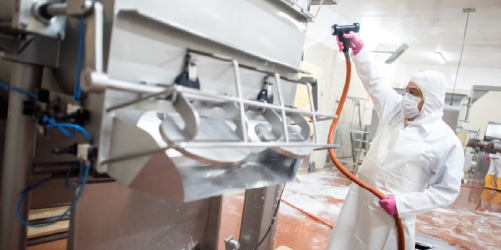
5. What Environment Will the Motor Be Working In?
The motor’s environment will determine the type of enclosure, or housing needed to protect the motor’s internal components. The ingress of water, dust, moisture, corrosive agents, or other contaminants can easily damage an electric motor.
In some cases, motors are used in atmospheres when moisture, dust or other corrosive agents are prevalent and which could harm the motor windings. In these cases, totally enclosed motors usually solve the problem. The other types of motor enclosures can protect a motor in various environments.
6. What type of Bearing is Required?
Bearings are crucial for the smooth operation of the motor. The type of bearing needed depends on the load and speed requirements. Choosing the right bearing is crucial. Bearings will fail due to excess heat or if contaminants are able to get into the bearings. If a bearing fails, they can be costly to replace.
7. In What Direction Is the Motor Going to Rotate?
Even though the rotation of many small motors can be reversed, it’s still an important question. Determine the rotation by looking at the end of the motor opposite the shaft extension end. Motors that rotate clockwise will have the notation “CW” and motors that rotate counterclockwise will be notated “CCW.”
8. How Will the Motor Be Mounted?
Motors can be mounted in various ways, depending on application and installation requirements. This question is easily determined by just looking at the application, with two factors to look for: Whether the motor is to be horizontal or vertical, and the type of mounting necessary.

If the motor will be mounted in the vertical position, then care must be taken to see that the motor has either a ball bearing or sleeve bearing designed to operate in the vertical position. Some motors, such as the Flex-in-1 motor from LEESON Motors, offer multiple mounting options, allowing the motor to be mounted in a variety of ways. Another option is a direct drive motor, which can be directly connected to the load without requiring additional transmission components. If the motor does not have such flexibility, users can purchase accessories to ensure proper installation. Some accessories include:
Pedestals: Often found in farm and barn applications.
Belly Bands: Used in HVAC applications, belly bands allow a motor to be placed within the airflow of HVAC units.
9. Will Thermal Protection Be Needed?
In many applications, heat is the greatest danger to a motor. Heat can wear down a motor’s grease and bearings and destroy insulation. All of this can cause a motor to overheat, requiring costly repairs or replacement. Thermal protection is essential to prevent damage in the event of overheating.
For a motor, ambient temperature (also known as room temperature) is the temperature of the air which, when coming into contact with the heated parts of a motor, carries off its heat. When selecting a motor, this will tell you the type of environment in which a motor can operate.
If your application environment will have high heat, you will need to consider thermal protection. Some motors come with built-in thermal protection, while others may require external protection devices.
Motors with built-in thermal protection feature a temperature sensitive element which activates a switch. This switch will stop the motor if the motor reaches the pre-set temperature limit.
Thermal Protection Switches
Two major types of thermal protection switches are available: automatic reset and manual reset.
Automatic reset, which automatically resets the switch, will re-start the motor when the temperature has been reduced.
Manual Reset is usually is in the form of a small pushbutton on the end of the motor opposite the shaft. When the motor has cooled sufficiently, the operator pushes the button, restarting the motor.
The type of reset chosen will often depend on the application. Automatic reset protection would be very dangerous on a drill press, for example, because the motor may have cooled to the point where it will automatically re-start, just as the operator is loosening the chuck with a chuck key. For applications that involve drives of power tools which are exposed, or could be harmful if started without warning, always use manual restart. However, by the same token, a fan or furnace blower motor would be well to have automatic protection.
Insulation Ratings
Motors with built-in insulation systems are grouped into temperature tolerance classes.
Class A: Uses materials with a preferred temperature index of 105˚Celsius.
Class B: Uses materials with a preferred temperature index of 130˚Celsius.
Class F: Uses materials with a preferred temperature index of 155˚Celsius.
Class H: Uses materials with a preferred temperature index of 180˚Celsius.
Selecting Your Motor
With these nine questions answered, you can make an informed decision to select your motor.
In many cases a single question will give you all nine answers. This is particularly true in selecting a replacement motor when all the information is already known.
Typical Torque Speed Curves
The torque-speed curve of a motor provides valuable insights into its performance characteristics. It shows the relationship between the motor’s torque and speed, helping you understand how the motor will behave under different load conditions. This information is crucial for ensuring that the motor can handle the demands of your application.
Most fractional horsepower alternating current motors are of 2, 4, 6 or 8-pole construction. For purposes of comparison, the characteristics of the AC motors indicated by these curves are based on 4-pole, 1725 rpm design.
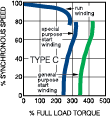 Capacitor Start/Induction Run Torque Speed Curve
 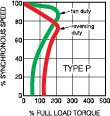 Permanent Split Capacitor (PSC) Torque Speed Curve
 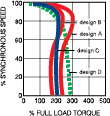 Three Phase/Polyphase Torque Speed Curve
  Permanent Magnet DC Torque Speed Curve
Motor Replacement
When replacing a motor, it’s essential to match the new motor’s specifications with the old one. Check the motor nameplate for details like horsepower, speed, voltage, and frame size. This will ensure that the replacement motor performs as expected and fits seamlessly into your existing setup.
In most cases, a motor made by a different manufacturer than the original can replace the original motor. However, if the motor is special (which the nameplate reading will usually indicate) directly replacing the motor with a duplicate is the best option. If premature failure is behind a motor burning out, you may not want to replace with the same type of motor. Motors may burn out for a variety of reasons, but it is always a safe bet that if the motor is under five years old, it has failed due to some misuse.
If there’s any sign of premature failure, before replacing your motor, make sure that:
- The original motor selection was the proper one.
- The motor was installed correctly, particularly the electrical connections.
- The power supply was correct.
- The motor was one of the proper size, (speed and horsepower) to do the job.
If any of these conditions were not met, the motor was not selected correctly.
Reading Motor Nameplates
If you're replacing an existing motor, much of the information you need to identify that motor is contained on the motor's nameplate. The nameplate also provides some basic information about a motor's operating characteristics. Nameplates typically include information like:
- Horsepower and Service Factor
- Frame Size
- Speed
- Voltage
For more information, visit How to Cross Reference an Electric Motor.
