
3 Key Benefits of a Gap Walk
As a plant manager, you are challenged to meet your daily production requirements while at the same time respond to corporate objectives. This is no simple task. While new conveying technologies have emerged that are designed to improve sustainability, efficiency and uptime, finding the time to research and determine feasibly of implementation can be nearly impossible.
However, there is hope. A Gap Walk consultation can help you to continue to focus on those production requirements while also investigating ways to bring in some of these newer conveying options.
Conducting a Gap Walk to review current conveyor components can help to assess whether an upgrade is warranted. In a Gap Walk, both latent, or unknown, and acknowledged pain areas are identified. Once these pains are identified, plans of action can be put in place to allow for conveying components to function more efficiently and optimize the overall equipment efficiency (OEE) of a plant.
Gap Walk 3-Step Process
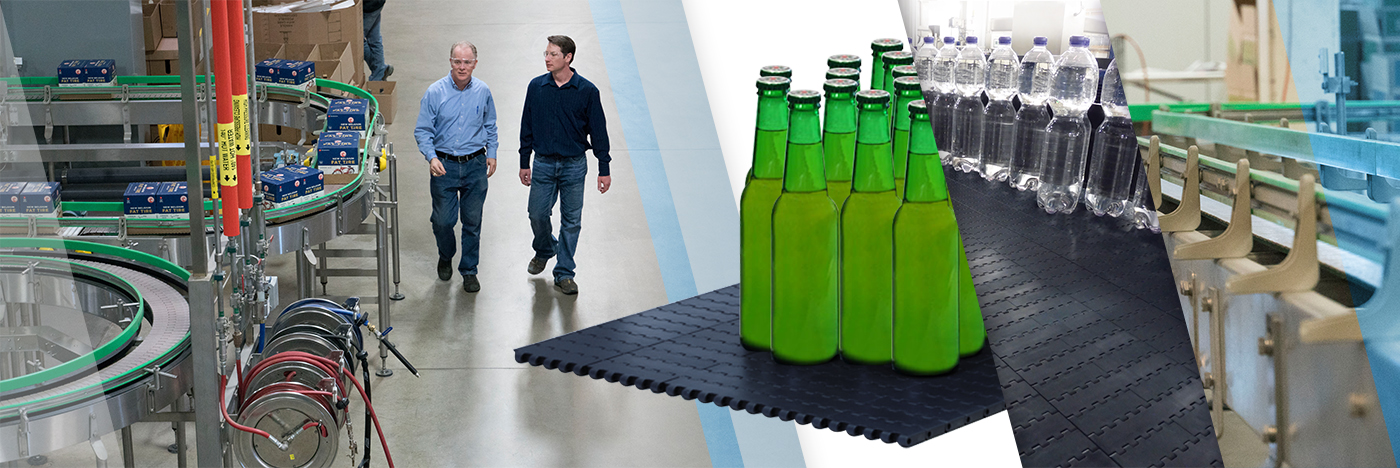
Our Industry Specialists can identify issues and provide tried and true solutions. They have worked around these applications on the engineering side and bring more than 20 years of experience. Plant managers and system integrators will lead the Industry Specialist through their facility. The Gap Walk process includes the following steps:
-
Listening
In this first step, the Industry Specialist meets with the customer and makes observations. By listening to the customer explain their current process and conveying system, the true pain points come to light. In this stage, we come to understand plant and corporate objectives and how the company is being measured against these objectives. In many cases, the most troublesome pain points are not the most obvious. It can take some digging and deeper understanding to bring these most harmful issues to light. -
Plant Walk Through
The second step involves the physical walk through of the plant in order to assess the current physical state of the conveying line. In this phase, areas of concern are reviewed, and nuisance maintenance issues are identified. In many cases, additional opportunities are discovered based on the experience and knowledge of industry best practices specialist.
-
Prioritizing
In this final step, the team of experts will identify the project priorities that will get the largest return on your time and money. Then, they will develop a proposal for implementation. This document will include observations with recommended solutions to solve the problems, as well as calculated savings regarding the return on investment. A package for retrofit and bill of material will also be included at the conclusion of this stage.
4 Key Benefits
So what are the benefits to conducting a Gap Walk? We’ve found that the top benefits from upgrades found during a Gap Walk include:
Sustainability
Newer technologies in conveying allow for greater water and energy conservation. An older conveyor that uses a chain or belt product must be lubricated with soap and water to keep the friction down. By upgrading to a “run dry” option, the need for this excess soap and water is eliminated. Not having to treat this water before putting it back into the public sewer system is one aspect of energy conservation as well.
Additional potential for increased energy efficiency exists in components such as gearboxes. You might learn that switching to a high-performance gear drive could reduce energy usage. We recently helped a customer downsize their motor while changing out gear drives, allowing them to realize an energy savings of $80,000 annually.
Cost Savings
Using a premium “run dry” conveying option in place of soap and water will save the facility the cost of that soap and water. This is just one example of reduced operating costs that can be realized during a Gap Walk. Using more efficient equipment can also decrease maintenance costs over time, which can very quickly make up for the cost of the upgraded equipment.
There might also be additional savings to be found by reducing maintenance on components such as bearings. We recently helped a customer who was seeing bearings fail because of contamination getting inside of the bearing seal. By replacing those bearings with high performance bearings, labor costs were reduced because the maintenance staff didn’t have to change out bearings nearly as often.
Safety
The ability to eliminate soap and water can also be a safety benefit. Eliminating soap and water on the plant floor will lower the chances of slips in the facility. The Gap Walk might also find solutions to accessibility issues, making the work safer for workers. Finding ways to lower plant noise levels is another safety benefit often found during a Gap Walk.
Productivity
In most cases, a Gap Walk will find solutions to help address sustainability, economy, and safety issues while still increasing productivity. Recently, by retrofitting a few sections of a rail and bracket system bottle line, we were able to significantly reduce change-over time and virtually eliminate downtime due to inconsistencies in the rail settings. Now, skilled technical labor can focus on maintaining vital equipment instead of performing the task of manually adjusting rails. Productivity might also be increased with a higher production of product following the enhancements suggested by a Gap Walk.
You may also find the potential for reduced downtime due to longer product life of high efficiency products such as gear drives.
Bearing failure is another common issue that leads to unplanned downtime and lost production. If bearings are failing too frequently because of corrosion or excessive relubrication, upgrading to high-performance, reduced-maintenance bearings could increase productivity.
Talk to one of our expert sales professionals about how our solutions can efficiently power your business.