
But the changes didn’t stop when the Industrial Revolution ended. Further innovations in machinery, particularly the electric motor, have continued to revolutionize how we produce food and textiles.
Machinery Improves Farming Tools
Before the Industrial Revolution, farm tools were primarily hand tools that required a lot of labor. The Industrial Revolution introduced machines, such as the seed drill, which allowed farmers to plant crops more efficiently. This new machinery led to increased yields and productivity. Steam-powered tractors and other agricultural machinery enabled farmers to cover larger areas of land, leading to the expansion of agriculture and increased crop production. With the increase in production, farmers were able to sell their produce to a wider market, leading to increased profits and a higher standard of living. The use of improved breeding techniques, the introduction of new feeds, and the use of machinery, such as the threshing machine, led to increased productivity in the livestock industry.
Overall, the Industrial Revolution had a profound impact on the agriculture. Work on the farm was easier and more productive and the world’s growing population had a greater abundance of food.
Electric Motors and Increased Farming Productivity
Historians consider the 1840s the end of the Industrial Revolution. However, the electric motor, a device not widely available until the end of the century, continued the innovation. Motors allowed farmers to work faster and more efficiently. To this day, agricultural electric motors power machinery such as pumps, generators, and milking machines.
Milk Pump Motors
Electric milking machines reduced the labor needed in the dairy industry, leading to increased efficiency and lower costs.
Irrigation Pump Motors
With the ability to pump water more efficiently and accurately, farmers were able to irrigate larger areas of land and produce more crops. This led to increased production and a more stable food supply.
Refrigeration Motors
Another significant impact of electric motor equipment on the agriculture industry was the increased use of refrigeration. With the ability to store food at lower temperatures, farmers could transport and sell their produce to more distant markets, leading to increased profits and a broader customer base. Today, refrigeration motors are found in commercial production facilities, restaurants, retail outlets and homes.
New Motorized Machinery
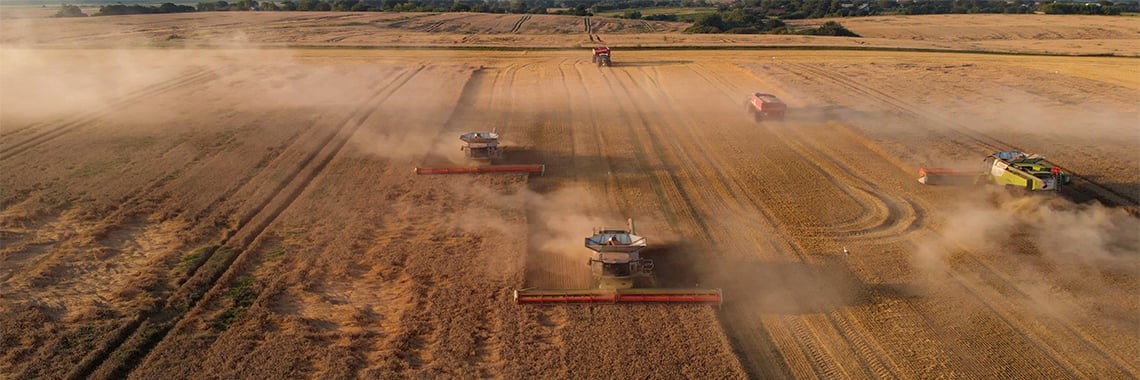
Electric motors led to the development of new types of machinery, such as the combine harvester. The combine harvester is one machine that performs several processes, including cutting, threshing, and cleaning.
Growing Today’s Food Supply
The Industrial Revolution had a profound impact on all aspects of the agriculture industry. Farmers could do more with less. The general population had a more consistent, varied and abundant food supply. The Industrial Revolution was only the beginning of innovation in agriculture. Today, Regal Rexnord is committed to making farmers’ work more easier, efficient and productive.
From helping grain customers cut costs with efficient equipment to developing irrigation solutions, Regal Rexnord continues to help the agriculture sector energy efficiently turn power into motion.
Talk To Our Sales Team
We're here to help. Our team of experts is ready to help energy-efficiently power your business.